Children Should Be Seen, Not Heard
If there was ever a rule about treating kids like living wallpaper, this was it. The goal was to have a child who could sit at a dinner table for two hours without uttering a single peep or interrupting the "important" adult talk. Back then, a quiet kid was the ultimate status symbol of a successful parent. We didn’t see it as stifling a child's voice or crushing their spirit. It was just considered good manners. If you had an opinion or a funny story, you kept it to yourself until you were safely out of earshot of the grown-ups.

Physical Punishment as Discipline
There was a time when "the belt" or a wooden spoon wasn't just a kitchen tool; it was a primary parenting consultant. If you stepped out of line, the response was swift and physical. It wasn’t seen as abuse. Instead, it was framed as "character building" or "teaching respect." People genuinely believed that you could beat the defiance out of a child and replace it with integrity. This form of ‘discipline’ created a world where kids didn’t respect the rules; they just lived in constant fear of the consequences.

Forcing Kids to Finish Every Bite
The dinner table often felt like a high-stakes standoff that lasted until 9:00 PM. Kids weren't allowed to leave until their plate was spotless, regardless of whether they were full or if the texture of the peas made them want to gag. "Think of the starving children" was the rallying cry that forced countless children to ignore their own fullness cues, which turned eating into a chore rather than a way to fuel their bodies. Looking back, it’s crazy to think about the effort that went into ensuring kids overate just for the sake of the principle.

Letting Kids Roam the Neighborhood Unsupervised
In the golden age of the "latchkey kid," your parents had no clue where you were from breakfast until the streetlights flickered on. There were no GPS trackers, no cell phones, and certainly no "check-in" texts. You were basically a free-roaming woodland creature. If you fell out of a tree or got lost three blocks over, you just had to figure it out. This level of freedom gave us some serious street smarts, but in today’s world, a parent would likely face a police report for letting a seven-year-old wander that far.

Dismissing Emotions as Drama
If you started crying because you were overwhelmed or hurt, you were usually met with a sharp "stop being so sensitive" or "give me something to cry about." Emotional intelligence wasn't exactly on the radar. Feelings were treated like inconveniences that needed to be tucked away or ignored entirely. There was no "sitting with your feelings" or "validating your experience." You were expected to tough it up and move on immediately. An entire generation learned to look at vulnerability as a weakness rather than a natural human trait meant to be understood and nurtured.

Kids’ Medical Advice From Relatives Instead of Doctors
Before Google or pediatrician portals, we had Great Aunt Linda’s weird herbal poultices and questionable home remedies. If you had a fever, you might get rubbed down with rubbing alcohol or forced to eat something pungent. Doctors were for broken bones or things that looked truly terminal. For everything else, you relied on "old wives' tales" passed down through the family tree. It’s a miracle we survived some of those concoctions. Modern parents would be horrified at the idea of bypassing a medical degree for a cousin’s hunch about a cough.

No Privacy in the Household
The idea of a "private life" for a child was essentially non-existent in many homes. Parents felt it was their moral duty to read your diary, rummage through your drawers, and walk into your room without so much as a polite tap on the door. Any protest was met with the classic "if you have nothing to hide, you have nothing to fear" logic, along with the good old “As long as you’re living under my roof…” statement. It was less about safety and more about total authority. It was as if your bedroom was just a small, monitored annex of your parents' kingdom.

Shaming as Motivation
Nothing lit a fire under a kid like being told their cousin Tommy was much better at math or that the neighbor’s daughter never talked back. Using shame as a catalyst for improvement was a standard tactic. The goal was to make you feel just bad enough about yourself that you’d strive to be better so that you could avoid the embarrassment. Instead of feeling inspired, most of us just ended up resenting Tommy. This created a competitive family dynamic where your worth was constantly being measured against someone else's.

Expecting Instant Obedience Without Explanation
The phrase "because I said so" was the beginning and end of any logical debate. You weren't supposed to understand the "why" behind a rule; you were just supposed to follow it instantly. People often viewed questioning a parent’s logic as an act of open rebellion or simple disrespect, which meant they valued obedience more than understanding. This approach may have sped things up in the moment, but it did little to help children develop independent judgment once the authority figure was no longer present.

Using Fear to Control Behavior
Parents used to have an entire roster of boogeymen ready to keep us in line. If it wasn't the threat of the police coming to take you away for being "bad," it was the idea that a teacher or even a divine power was watching your every mistake with a clipboard. This "scared straight" approach was effective for keeping kids quiet, but it also meant we grew up with some pretty weird anxieties. Kids weren't behaving because it was the right thing to do; they were behaving so the "scary man" wouldn't get them.
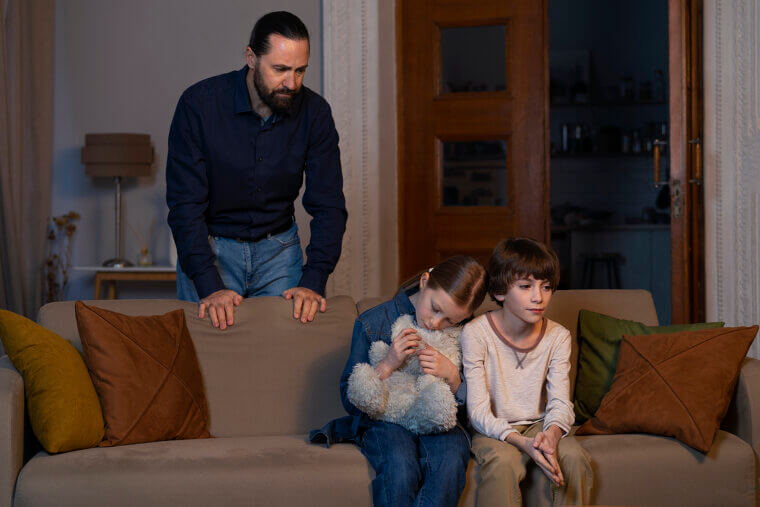
Leaving Children Alone in Cars or at Home
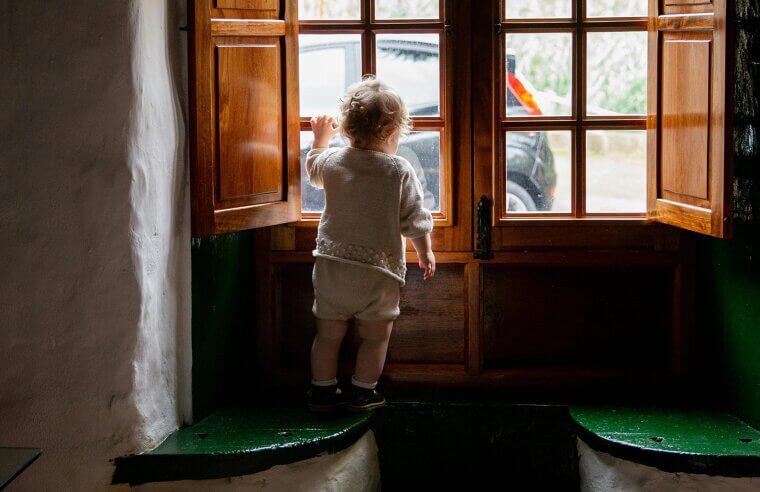
It was perfectly normal for a mom to pop into the grocery store for twenty minutes while the kids sat in the station wagon with the windows cracked. No one called the cops, and no one panicked. Similarly, being a "latchkey kid" meant coming home to an empty house at age seven or eight and making your own snacks while waiting for work hours to end. Today, this would be considered criminal negligence. Back then, it was just viewed as a way to foster independence and handle a busy schedule.
Minimizing Boundaries With Extended Family
Forcing a child to hug or kiss a relative they barely knew was standard practice. If you pulled away or said no, you were called "rude" or "difficult." Your bodily autonomy was secondary to making sure Great Uncle Herb didn't feel slighted. It was an era where "being nice" was the highest priority, even if it made the child feel incredibly uncomfortable. We now know how important it is for kids to have a say in physical touch, but back then, you just did what you were told.

Forcing Respect for Elders Regardless of Behavior
The rule was simple: if someone was older than you, they were right. It didn't matter if an uncle was being rude or a grandmother was being manipulative; you were expected to sit there and take it with a smile. Correcting an adult was the ultimate sin, and this taught kids that age was a shield for inappropriate behavior and that their own boundaries didn't matter if the other person had more gray hair. It’s a concept that has luckily been replaced by the idea that respect is earned.

Ignoring Mental Health Completely
Words like "anxiety" or "depression" weren't really in the parenting vocabulary. If a child was struggling mentally, they were usually told to "go outside and play" or "stop moping." There was a huge stigma around the idea that a kid could actually be suffering from something internal. It was easier to label it as a bad attitude or a lack of discipline. This "rub dirt on it" mentality meant that many serious issues went completely unnoticed and untreated for decades, leaving many to figure it out as adults.

Academic Success as the Only Measure of Worth
If your report card didn't have a string of A's, you were often treated like a major disappointment. There wasn't much room for being "the creative one" or "the athletic one" if the grades weren't there to back it up. People felt immense pressure to perform academically because they saw it as the only way to have a stable life, and they often equated resting or taking a break with laziness. This narrow focus meant that many kids with unique talents felt like failures before they even reached high school.