Kids Playing Outside
“Be back before sunset” wasn’t a suggestion; it was the entire parental supervision strategy. Mothers didn’t know if their kids were at the park, in someone’s treehouse, or halfway across town trading baseball cards with other kids. You could vanish for eight hours on a Saturday, show up scraped and muddy, and the only question you’d get was, “Did you have fun?” There were no phones to check in with and no tracking apps to explain where you’d been. Neighborhoods functioned on trust and familiarity, with other adults keeping a loose eye out without interfering. Kids learned independence early simply by being left alone to figure things out. Looking back, it feels reckless by today’s standards, but at the time it was considered normal and even healthy. The rule worked because everyone followed it, and no one thought twice about it.

Landlines Only
Practically every kitchen wall had a phone attached to it. Privacy during phone calls meant stretching that cord into the hallway closet, but let’s be honest: there was no privacy. And if someone was on the phone? Too bad. You're waiting. "Can I use the phone?" was a genuine question, and the answer wasn’t always yes.

Homework Before Television
You couldn't even think about turning on the television until you had solved every math problem and memorized every spelling word. "Did you finish your homework?" wasn't a question. It was a test to see if you were stupid enough to lie. Homework came first, always, no exceptions, even if your show was on and you'd been waiting all week for it.

Appointment TV
If you were not on your couch at 8 PM on Thursday, you missed the show. There was no pause button, no rewind, no "I'll just stream it later." You either watched it live or you became a social outcast the next day. The VCR could record shows, but most people didn’t bother with it. Instead, they just scheduled their lives around the TV shows.

Strict, Non-Negotiable Bedtimes
Eight o'clock meant lights out, end of discussion, no appeals process. It didn’t matter if you were not sleepy, or if something good was on TV. Bedtime was bedtime, enforced with the rigidity of a military curfew. Parents treated bedtime like a sacred ritual that needed to be followed, but they probably did it so they could get some hours of peace for themselves.

The Thermostat Was Off-Limits to Kids
Touching the thermostat was completely off limits, especially for kids. Dads would guard it like it controlled the family's entire financial future, which, according to him, it basically did. Some parents even went to the extent of getting locked plastic covers to prevent ‘unauthorized’ temperature adjustments.

No Calling After a Certain Hour
If you were calling after 9 PM, someone better be dead or dying. Social calls had business hours, and those hours ended at a reasonable time because waking up someone's whole family with a phone call without a genuine reason was rude. The phone was a shared household resource, and late-night calls disrupted everyone, not just the person being called.

Turning the Lights off
Leaving a room without turning the light off was a war crime against the family budget. You’d walk out for literally ten seconds to grab something from another room and return to darkness because someone had already flipped the switch. To be fair to all dads, though, those old bulbs did consume a lot of electricity.

Printed Manuals, Encyclopedias, and Recipe Boxes
Google didn't exist, so if you needed to know something, you walked to the bookshelf and grabbed Volume H of the Encyclopedia Britannica. They were so heavy that you could practically use them as defense weapons. And if you needed a recipe, you consulted your mom's recipe box, which was filled with index cards covered in handwriting and mysterious stains.

Kids Answering the Landline
The phone would ring, and some eight-year-old would just... answer it. "Hello, Smith residence!" they’d announce to literally anyone. Could be Grandma. Could be a telemarketer. Could be someone looking for their dad about an "urgent matter". It didn’t matter. What mattered was that the kids were actually responsible enough to answer the phone.

DIY-First Mentality for Household Repairs
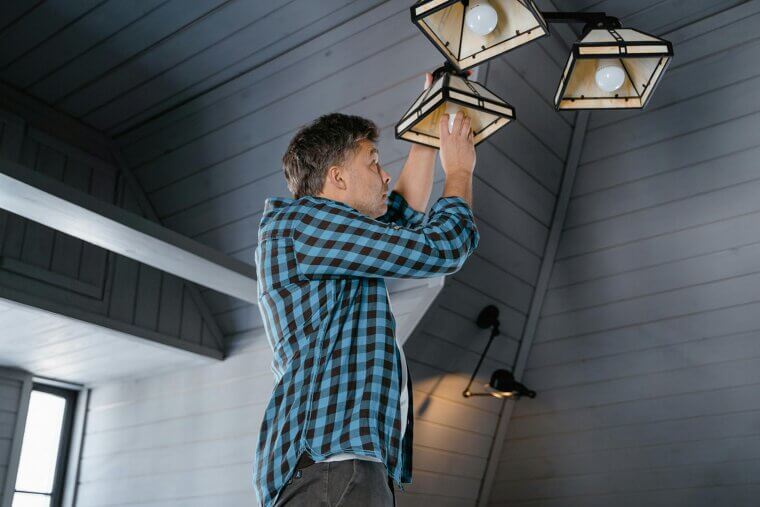
If something broke, you fixed it yourself, or it stayed broken forever. Calling a professional for anything except major disasters was considered wasteful. Men would spend an entire weekend trying to fix a leaky faucet with increasingly creative solutions, while the women would watch and wonder if they should've just called a plumber.
Strongly Gendered Household Roles
Households followed a “traditional” division of labor that few people ever questioned. Men typically handled gardening, car maintenance, trash, and home repairs. Women took care of cooking, cleaning, laundry, and raising the kids. No one negotiated or discussed this; it was just how things were.

Simple Home-Security
The home security system of the 1980s was a door lock and a dad who thought he was intimidating. That's it. No cameras, no alarms, no motion sensors. Just confidence and a decent deadbolt. Some people didn't even lock their doors during the day because "everyone knows everyone." Somehow, it worked more often than it should have.

No Streaming
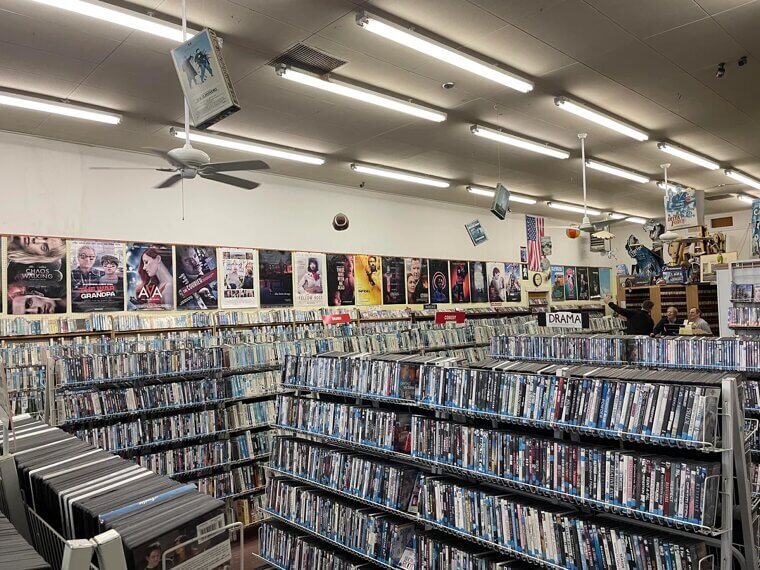
Weekend movie nights existed back then as well, but they meant driving to Blockbuster and praying they had the movie you wanted in stock. If not, you stood in the "New Releases" aisle for 20 minutes reading the backs of VHS boxes like they were religious texts, trying to pick something that wouldn't make your whole evening a waste.
Mail-Order Catalogs and Coupon Clipping
The Sears catalog was thicker than most religious texts and served as both a shopping guide and a wish book for kids who'd circle everything they wanted for Christmas. Sunday newspapers came with coupon inserts, and mothers had entire organizational systems for coupons, filed by category and expiration date. It was a serious sport.

Strict House Rules
Each household also had its own rigid rulebook; no feet on the furniture. No drinks in the carpeted rooms. No slamming doors. Always eat at the table with the family. Don't touch the thermostat unless you're paying the electric bill, which you aren't, so back away slowly.

Paper Calendars for Schedules
The kitchen wall calendar was the family's shared brain, and everything went into that brain: doctor appointments, birthdays, soccer practice, parent-teacher conferences, the day the dog needed shots. Coordinating schedules required physically looking at the calendar and negotiating in person. And if it wasn't on the calendar, it didn't exist.

Informal Babysitter Hiring
Every other parent had a babysitter who was a teenager from down the street whose only qualification was being 14 and theoretically responsible. There were no background checks, no references, no certifications. It was just, "Jenny seems nice, and she's free on Saturday." The bar for babysitting was incredibly low, and it seemed like just about any decent person could get it.

One-Family Car
Most households made do with a single family car, and everyone planned their day around it. Work schedules, school runs, errands, social plans… Everything had to be coordinated in advance, and if the car was out, it was out. There were no ride-hailing apps, no instant backups, and all you could do was wait for the vehicle.